

GMP
GMP Overview
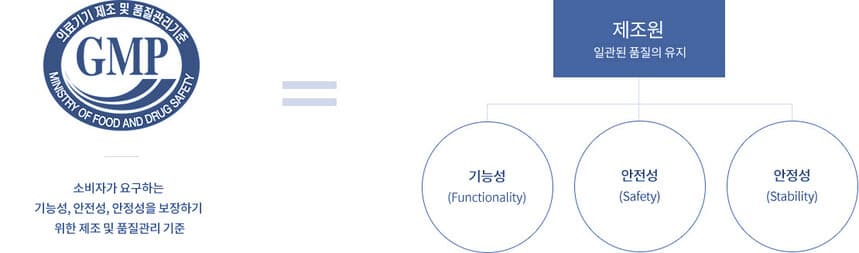
GMP (Good Manufacturing Practice) defines minimum standards to assure the safety and effectiveness of medical devices. It is a quality management system standard requiring compliance across all processes from development through procurement of raw and subsidiary materials, manufacturing, inspection, packaging, installation, storage, shipment, claims, and returns to ensure medical device quality.
In Korea, manufacturers must establish a quality management system and demonstrate conformity under the Ministry of Food and Drug Safety's "Medical Device Manufacturing and Quality Control Standards," as required by the Medical Devices Act and related enforcement rules for manufacturers and importers.
Background of GMP
As science confirmed the important role of health functional foods in preventing chronic degenerative diseases and promoting public health, the need grew for scientific proof of safety and functionality and for operational management systems. Rising demand in the health functional food industry also revealed abuses of loopholes in prior regulatory frameworks under the Food Sanitation Act.
Stricter national oversight of manufacturing and distribution was needed. The Health Functional Foods Act was enacted and promulgated (Aug. 26, 2002) and took effect (Jan. 2004), promoting development of the health functional food industry applying advanced life science technologies.
Expected Benefits
- Increased corporate competitiveness and sales
- Improved internal and external company credibility
- Foundation for practical product liability (PL) response strategies
- Improvement of facilities and limitations in productivity and management
- Improved awareness and qualifications of workers and managers
- Development and operation of on-site document management systems and forms