
ISO 14001
ISO 14001 Overview
Unlike other international environmental regulations, ISO 14001 evaluates an organization's overall environmental management system and grants objective certification. It goes beyond simply checking compliance with environmental laws or regulatory standards to assess how comprehensively a company implements environmental policy, planning, operation, inspection and corrective action, management review, and continual improvement.
The application of a unified international standard and its use in trade will have a broader impact across business management than national environmental certification schemes. When international environmental agreements linked to trade are combined with the ISO environmental certification system, the impact of environmental issues on corporate activity will be substantial.
ISO 14001 was revised to ISO 14001:2015 in September 2015, emphasizing continual improvement and customer satisfaction and promoting a process-based approach to system operation.
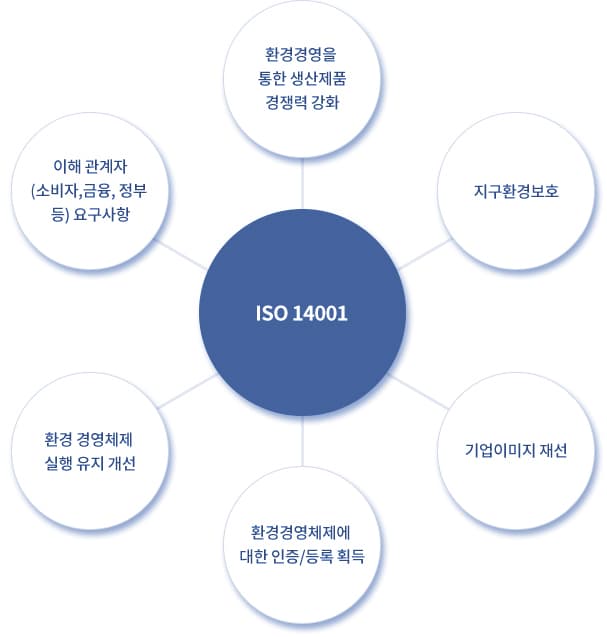
International Background of ISO 14001
International background
- Deepening environmental pollution due to industrialization, population growth, and urbanization
- Environmental issues such as ozone depletion and global warming evolving from reversible local problems to global challenges
Domestic background
- Pollution of living and natural environments due to population growth and industrial development
- Intermittent trade barriers in the international economic community
- Growing public demand for improved quality of life
Expected Benefits
Almost every business can benefit from obtaining ISO 14001 certification. Certification provides sufficient advantages for organizations in all industries and sectors and offers a foundation for related sustainable practices. The advantages of ISO 14001 certification include the following:
Improved environmental management
An environmental management system conforming to ISO 14001 helps identify potential impacts and implement controls and actions to minimize risk. ISO 14001 reduces resource use, improves overall business efficiency, and provides quantifiable, measurable tools to enhance operational capability.
Enhanced business capability
End customers often require certificates as a condition of supply. Certification therefore becomes a capability for business expansion. When entering new market segments, certification is one of the best tools to streamline processes.
Proven business credibility
Independent audits against recognized standards demonstrate commitment and enhance your brand. Organizations that comply with ISO 14001 invest significant time and effort. Buyers and other stakeholders recognize this when deciding whom to work with.
Improved stakeholder relations
Prioritizing the environment generates a positive response from stakeholders. ISO 14001 is recognized worldwide. When expanding into other regions, certification is one of the best ways to show potential customers that you take responsibility seriously.
Reduced operating costs
Improving energy and water efficiency and minimizing waste means cost savings.
Regulatory compliance
Understanding how legal and regulatory requirements affect your organization makes compliance easier and more rational. ISO 14001 also helps you meet future legal requirements—a major advantage in a constantly changing regulatory landscape.